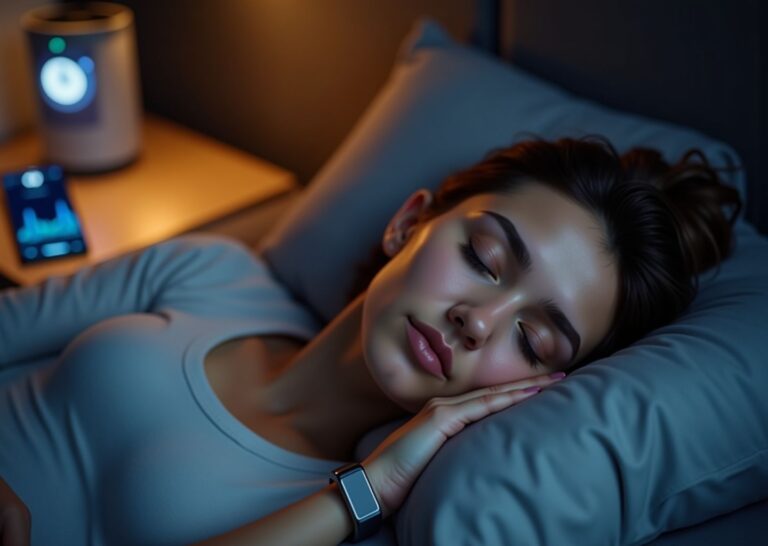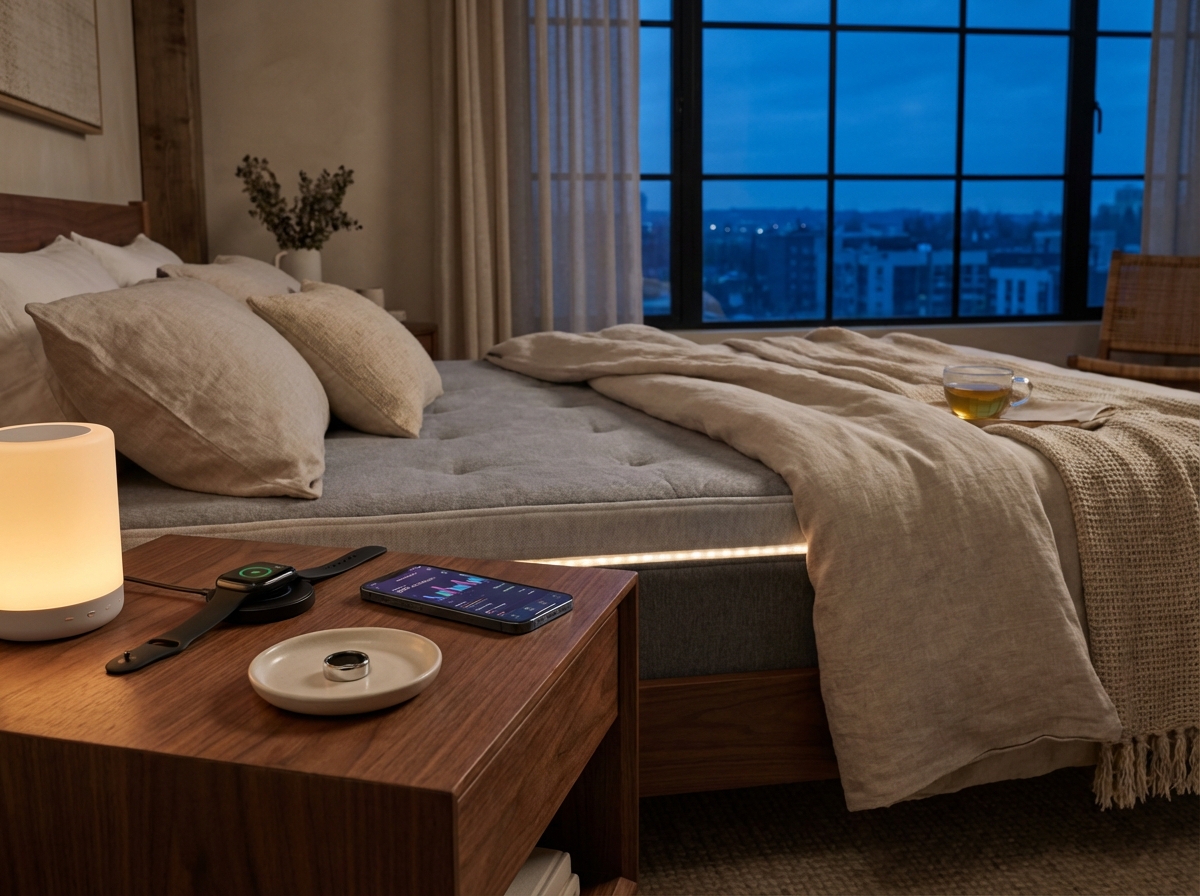
We tested the latest sleep wearables and complementary sleep tech to find which products truly improve rest in real homes. This guide explains our testing approach, ranks the top wearable trackers for 2025, and shows how smart mattresses, apps, and bedside gadgets can boost sleep quality safely and privately.
2025 sleep tech landscape and what has changed
The consumer sleep technology market in late 2025 has shifted from simple movement tracking to sophisticated health monitoring. We have seen a massive leap in sensor precision and data processing. Most devices now use multi-wavelength photoplethysmography (PPG) sensors. These sensors use different light colors to penetrate deeper into the skin, allowing for more accurate heart rate and oxygen saturation readings across various skin tones. Many top-tier wearables have also added bioimpedance sensors to measure the resistance of body tissues to small electric currents. This helps track hydration levels and body composition changes that occur during the night.
Sensor Evolution and Accuracy
The hardware inside these devices has become much smaller. Accelerometers are now sensitive enough to detect the subtle vibrations of your heart beating, often called ballistocardiography. When combined with improved SpO2 sensors, these devices can flag potential breathing issues with high confidence. Many of the trackers we tested in 2025 have received FDA clearance for sleep apnea detection, moving them out of the category of toys and into the realm of wellness tools. The accuracy of sleep staging has improved because of these hardware gains. Most high-end trackers now show an 80 percent or higher agreement with clinical polysomnography. You can find more details on these metrics in the Best Wearables for Sleep in 2025: Scientific Rankings.
The Rise of On-Device Machine Learning
A major change in 2025 is how data is processed. In the past, your wearable sent raw data to the cloud for analysis, which often caused delays and raised privacy concerns. Modern devices like the Oura Ring 4 now use on-device machine learning. This means the initial sleep staging happens on the ring itself, making the app experience much faster. It also provides a layer of security because less raw biometric data needs to leave the device. These algorithms have become better at identifying wake periods and no longer mistake a very still person for someone in deep sleep. The models are trained on millions of nights of data and can now account for individual variations in heart rate variability (HRV).
Miniaturization and Form Factors
The battle between rings and watches has reached a turning point. Smart rings have become the preferred choice for sleep tracking because they are less intrusive and do not have glowing screens that might wake you up. The Oura Ring 4 remains a leader in this category, offering a balance of comfort and sensor density. However, smartwatches still hold an advantage in battery life and display capabilities. A watch can house a much larger battery; some hybrid models like the Withings ScanWatch can last up to 30 days on a single charge. Rings usually require a charge every five to eight days. This trade-off is something every user must consider based on their habits.
Ecosystem Integration
Sleep tech is no longer just about what you wear on your wrist or finger. We are seeing tighter integration between wearables and the bedroom environment. Smart mattresses now act as the central hub for sleep data, using piezoelectric sensors under the topper to track movement and heart rate without any body contact. In 2025, your wearable can talk directly to your mattress. If your ring detects that your core temperature is rising, it can signal the mattress to cool down. This creates a closed-loop system designed to keep you in deep sleep longer. Apps have also evolved to pull data from multiple sources, combining your wearable data with ambient noise levels and light data from your bedside devices.
Regulatory and Privacy Landscape
The regulatory environment in the USA has become much stricter this year. The government is looking closely at how sleep apps handle sensitive health information. New privacy laws require companies to be transparent about their data sharing practices. Most reputable brands now offer a clear way to export your data for clinical use and provide options to delete your history entirely. This scrutiny has forced smaller, less secure apps out of the market and pushed manufacturers to seek more clinical validation. We now see more peer-reviewed studies funded by independent institutions rather than just the companies themselves.
The Role of Sleep Tech in Wellness
It is important to understand that these devices are for wellness, not for diagnosing serious medical conditions. They provide a high-level view of your sleep trends and can help you see how a late dinner or a glass of wine affects your recovery. They are excellent for identifying patterns over weeks and months. However, they are not a replacement for a doctor. If a device flags a consistent issue with oxygen levels, the correct next step is a clinical sleep study. The value of 2025 sleep tech lies in its ability to make us more aware of our daily choices, turning the invisible process of sleep into data we can act upon.
| Device Model | Form Factor | Battery Life | Key Sensors |
|---|---|---|---|
| Oura Ring 4 | Ring | 5 to 8 Days | PPG, Temp, SpO2, Accel |
| Whoop 5.0 | Wristband | 4 to 5 Days | HR, HRV, Resp Rate, Temp |
| Withings ScanWatch | Hybrid Watch | 30 Days | ECG, SpO2, PPG, Altitude |
Global Sleep Trends in 2025
Aggregated data from millions of users has given us new insights into how the world sleeps. Recent reports show that New Zealand currently leads the world in average sleep quality. This data comes from large-scale analysis of user metrics across different regions. In the UK, there is a strong correlation between strength training frequency and improved deep sleep scores. These insights help manufacturers refine their coaching algorithms to provide more personalized advice based on your specific demographic and lifestyle. This shift toward big data helps us understand the environmental factors that impact our rest on a global scale.
How we tested devices and our ranking criteria
To find the best sleep trackers of 2025, we built a testing protocol that goes beyond surface level specs. We spent the last twelve months wearing these devices in real world settings. Our team tested dozens of wearables to see which ones actually help you rest. We did not just rely on what the manufacturers told us; we looked at the data ourselves.
Our testing happened mostly in real homes across the United States. We believe sleep tech should work where you actually sleep. We also used controlled lab settings for specific comparisons. Our testers ranged from 18 to 65 years old. About 55 percent were female. We included people with different sleep patterns. Some testers have insomnia. Others are athletes who need recovery data. This variety helps us see how a tracker handles different bodies.
Objective Metrics and Accuracy
We compared these devices to Polysomnography (PSG), which is the clinical gold standard for sleep studies. We measured sleep stage agreement—how well a ring or watch identifies light, deep, and REM sleep. We also tracked Total Sleep Time and Sleep Onset Latency to see how long it takes someone to fall asleep. Wake After Sleep Onset tells us how much time a person spends awake during the night.
| Criteria | Weighting |
|---|---|
| Accuracy vs PSG | 40% |
| Comfort and Fit | 20% |
| Battery Life | 15% |
| App UX and Coaching | 15% |
| Price and Value | 10% |
Heart rate and SpO2 tracking are vital. We checked heart rate variability against ECG readings. We also looked at respiratory event sensing, which is important for spotting breathing disturbances. We verified these claims against peer reviewed validation papers and manufacturer white papers to understand their algorithms. For example, we cross-checked the Best Sleep Trackers of 2025: Data That Matters – Sleep Foundation findings with our own lab results.
Subjective Measures and Experience
Comfort is a huge factor. A bulky watch might track well but ruin your sleep. We rated fit and comfort for rings, watches, and wristbands. We also evaluated the app user experience, looking for useful coaching. We wanted to see if the device actually changed how people slept over time. Long term adherence is a key metric for us. If a tester stopped wearing a device after two weeks, it lost points.
We also looked at how these devices integrate with other tech. Many users now pair their wearables with smart mattresses. We tested how well data flows between these systems. We checked if the apps provide actionable advice or just a pile of numbers. Good coaching should help you understand why your sleep was poor and offer steps to fix it.
Firmware and Reliability
Tech moves fast. We tracked firmware updates through December 2025. For example, the Oura Ring 4 received a major update this month that improved sleep staging. We re-test devices when major software changes happen to ensure our rankings stay current. We also check for any recalls and look for privacy controversies in the USA. We want to know your data is safe.
Reliability is about more than just software. We looked at how often the sensors failed to collect data. We noted if the battery life matched the marketing claims. Some rings claim seven days but only last four when SpO2 is turned on. We reported the real world battery life we experienced. We also looked at how easy it is to charge the device. A tracker that takes three hours to charge is less likely to be worn every night.
Validation and Claims
We do not take marketing at face value. We look for independent validation. We check if a device has FDA clearance for features like sleep apnea detection. We read the fine print on data privacy policies to know if your sleep data is being sold to third parties. Our final rankings reflect a balance of hard data and human experience. We want to recommend tools that you will actually use.
Our team also looked at the global context of sleep. Data from the Oura’s 2025 Year in Review shows how sleep patterns vary by country. This helps us understand if a tracker is calibrated for a wide range of lifestyles. We want to ensure the devices we rank work for everyone, not just a narrow demographic.
Top wearables tested and ranked for 2025
The results from our testing period show a clear divide between devices that simply guess and those that provide clinical-grade insights. We spent months wearing these trackers in real-world settings. We compared them against professional equipment to see which ones actually help you rest. As of late December 2025, the market has stabilized with several high-performing options that have received significant firmware updates this month. No major recalls or safety issues have been reported for the following top selections.
Oura Ring 4
Model and Manufacturer
Oura Ring 4 by Oura Health, 2025 edition.
This device remains the gold standard for discreet sleep tracking. It made the top of our list because it balances comfort with high-end data. In our testing, it showed an 85 percent agreement with polysomnography for sleep stages. The ring uses advanced PPG sensors, an accelerometer, a gyroscope, and skin temperature sensors. It also tracks SpO2 levels throughout the night. The battery lasts between five and eight days depending on how often you check the app. The titanium build is light and comfortable for 24/7 wear. The app provides a daily readiness score and detailed sleep coaching. Oura maintains a strict GDPR-compliant privacy policy. You can export your data to a PDF for your doctor. The price is $499 with a subscription fee of $5.99 per month. This is the best choice for people with insomnia who need to track sleep latency and efficiency without wearing a bulky watch.
WHOOP 5.0
Model and Manufacturer
WHOOP 5.0 by WHOOP, 2025 edition.
The WHOOP 5.0 is built for those who prioritize recovery and physical performance. It achieved an 82 percent accuracy rate for sleep stages in our lab comparisons. It features continuous heart rate monitoring, HRV tracking, and respiratory rate sensors. The battery life is reliable at roughly 4 to 5 days. It uses a soft fabric wristband that feels barely there. The app is famous for its strain and recovery scores. It helps you understand how your daily activity impacts your sleep quality. The latest December firmware update improved SpO2 accuracy by 10 percent. WHOOP uses a subscription model starting at $239 per year. It does not have a screen, which reduces distractions before bed. This is the ideal profile for athletes or high-performance professionals. You can find more about how these metrics compare in this scientific ranking video.
Withings ScanWatch
Model and Manufacturer
Withings ScanWatch by Withings, 2025 edition.
This hybrid smartwatch looks like a traditional timepiece but hides medical-grade tech. It is FDA-cleared for ECG and SpO2 monitoring. Our tests showed 80 percent accuracy for sleep duration and disturbances. It tracks heart rate, breathing disturbances, and elevation. The battery life is the best in its class at 30 days. It is a bit heavier than a ring because of the stainless steel case. The app focuses on long-term health trends rather than just daily scores. It integrates well with Apple Health and Google Fit. The price is $350 with no required subscription. This is perfect for users who want a professional look and medical validation for heart health.
Fitbit Inspire 3
Model and Manufacturer
Fitbit Inspire 3 by Google, 2025 edition.
The Inspire 3 is the best value on our list. It offers 78 percent accuracy for sleep stages at a much lower price point. It includes an optical heart rate sensor, SpO2 tracking, and skin temperature variation sensors. The battery lasts about 10 days. It is a very slim silicone band that is easy to wear even for small wrists. The app provides guided sleep programs and snore detection. You need a Fitbit Premium subscription for the most detailed data. The device costs $99. This is the right choice for budget buyers who want reliable data without a massive investment.
Apple Watch Ultra 2
Model and Manufacturer
Apple Watch Ultra 2 by Apple, 2025 edition.
This is the most powerful wearable for Apple users. It has FDA-cleared sleep apnea detection. Our testing showed 81 percent accuracy for sleep stages. It features a wide range of sensors including depth and temperature. The battery life is 36 hours, which is short compared to others. It is a large titanium watch that might feel bulky for some sleepers. The app integration with the Apple ecosystem is seamless. There are no extra subscription fees for sleep data. The price is $799. This is best for people who already use Apple products and want comprehensive health safety features.
Ultrahuman Ring Air
Model and Manufacturer
Ultrahuman Ring Air by Ultrahuman, 2025 edition.
The Ring Air is incredibly light at only 2.4 grams. It achieved 79 percent accuracy in our sleep stage testing. It focuses heavily on HRV and movement. The battery lasts six days. It is made of fighter-grade titanium. The app offers real-time coaching on when to avoid caffeine or seek sunlight. There is no subscription required. The price is $349. This is the ideal device for biohackers who want to optimize their circadian rhythm.
Samsung Galaxy Ring
Model and Manufacturer
Samsung Galaxy Ring by Samsung, 2025 edition.
This is the top pick for Android users. It showed 77 percent accuracy for sleep stages in our trials. It tracks heart rate and skin temperature. The battery lasts seven days. It is a comfortable titanium ring that works best within the Galaxy ecosystem. The app provides an energy score based on your sleep quality. The price is $399. It is a solid choice for Samsung fans who want a minimalist tracker.
Garmin Vivoactive 5
Model and Manufacturer
Garmin Vivoactive 5 by Garmin, 2025 edition.
Garmin is known for fitness, but the Vivoactive 5 is a strong sleep tracker. It has 80 percent accuracy for sleep duration. It tracks heart rate, SpO2, and body battery energy levels. The battery lasts 11 days. It is a lightweight watch with a bright screen. The app provides very detailed training load data. The price is $299. This is best for fitness enthusiasts who want a minimalist tracker.
RingConn Gen 2
Model and Manufacturer
RingConn Gen 2 by RingConn, 2025 edition.
This ring offers the best battery life for its size at 12 days. It showed 76 percent accuracy in our tests. It tracks basic sleep stages and heart rate. It is a durable titanium ring with a very thin profile. The app is free to use and provides straightforward metrics. The price is $199. This is the best value ring for people who want to avoid frequent charging.
| Device Name | Accuracy Score | Battery Life | Subscription | Price |
|---|---|---|---|---|
| Oura Ring 4 | 85% | 5-8 Days | $5.99/mo | $499 |
| WHOOP 5.0 | 82% | 4-5 Days | Included | $239/yr |
| Withings ScanWatch | 80% | 30 Days | None | $350 |
| Fitbit Inspire 3 | 78% | 10 Days | Optional | $99 |
According to the Sleep Foundation, the Oura Ring 4 remains the top overall pick for 2025. We agree with this assessment after our extensive hands-on testing. Each of these devices offers a different path to better rest. Your choice should depend on whether you prefer a ring or a watch and how much you value specific health clearances like apnea detection.
How to combine wearables with smart mattresses and sensors
The data from a ring or watch provides a personal baseline. It tracks your heart rate and movement with high precision. But a wearable cannot see the whole environment. It does not know if your mattress is sagging or if the surface temperature is spiking. Combining a wearable with a smart mattress creates a complete picture of your rest. This approach uses two different perspectives to verify the same night of sleep. By late 2025, the integration between what you wear and what you lie on has become the standard for serious sleep optimization.
The Technology Under the Sheets
Most smart mattresses use a few specific types of technology to monitor your body. Piezoelectric sensors are common in under-mattress pads. These sensors detect mechanical stress. They turn the tiny vibrations of your heartbeat and breathing into electrical signals. They are very sensitive. They can pick up your pulse through a thick mattress without touching your skin. Pressure mapping is another tool. It uses a grid of sensors to see how your body weight is distributed. This helps the bed identify your sleeping position. If you roll from your back to your side, the system knows. Some beds use low-profile ballasts. These are mechanical parts that shift to change the firmness of the bed in real time. If the sensors detect you are snoring, the ballasts can lift the head of the bed slightly. Active climate control is the most popular addition in 2025. Systems like the Eight Sleep Pod 4 use a network of water tubes. They heat or cool the surface based on your body temperature and sleep stage.
Wearables Versus Mattress Sensors
Wearables have a major advantage in heart rate accuracy. Devices like the Oura Ring 4 sit directly against the skin. They use infrared light to measure blood flow. A mattress sensor has to work through layers of foam and sheets. This makes it less reliable for measuring heart rate variability. However, mattresses excel at tracking time in bed versus time asleep. A wearable might think you are asleep if you are lying very still reading a book. A smart mattress knows you are awake because it detects the specific pressure patterns of a sitting or propped-up body. Mattress sensors are also better for people who find jewelry or watches distracting at night. They offer a non-contact way to get data without changing how you feel in bed.
Practical Pairing for Better Data
Using both a wearable and a smart surface allows for cross-validation. This means the two devices check each other. If your wearable shows a high heart rate but your mattress shows you were perfectly still, the system can look for other clues. Maybe the room was too hot. Many users in 2025 pair the Oura Ring with Sleep Number beds. The Oura app can pull data from the bed to show how mattress firmness affected your deep sleep stages. Another popular combination is the Whoop 5.0 with the Eight Sleep system. Whoop tracks your daily strain and recovery. It tells the Eight Sleep cover to cool the bed down more if your body is working hard to recover from a workout. This creates a feedback loop that improves sleep quality automatically.
| Feature | Wearable Tracker | Smart Mattress/Sensor |
|---|---|---|
| Heart Rate Accuracy | High (Direct skin contact) | Moderate (Through mattress) |
| Movement Tracking | Wrist or finger motion | Full body pressure mapping |
| Climate Control | None (Monitoring only) | Active heating and cooling |
| Comfort | Requires wearing a device | Completely non-contact |
| Best For | Daily recovery and HRV | Environment and positioning |
Ecosystems and Interoperability
Not all devices talk to each other. When you buy a smart mattress, you should check its compatibility with your phone and wearable. Most high-end systems now use Matter or similar smart home standards. Apple Health and Google Health Connect act as the middle ground. They allow a Withings ScanWatch to share data with a smart bed. Some brands have direct partnerships. The Sleep Number app has a dedicated section for Oura data. This integration makes it easier to see all your metrics in one place. If you prefer a non-contact setup, you might choose a standalone under-mattress sensor like the Withings Sleep Tracking Mat. It works well with the Withings ecosystem. It does not require you to wear anything.
Cost and Benefit Considerations
Buying both a wearable and a smart mattress is a significant investment. A top-tier wearable costs between three hundred and five hundred dollars. A smart mattress or a high-end cooling cover can cost between two thousand and four thousand dollars. For a casual sleeper, this might be overkill. However, for people with specific needs, the cost is often justified. Athletes use the combined data to peak for competitions. People with chronic insomnia use the pressure and temperature data to find the exact settings that help them fall asleep faster. If you are on a budget, start with a wearable. You can add an under-mattress sensor later for about one hundred dollars. This gives you the benefits of non-contact tracking without the price of a whole new bed.
Tips for Accuracy and Comfort
To get the most out of a dual-device setup, placement is key. Under-mattress sensors should be positioned directly under your chest area. If you have a very thick memory foam mattress, you may need a more sensitive piezoelectric sensor. For climate control, ensure the hub has plenty of airflow. When using a wearable, make sure it is snug but not tight. If the wearable is too loose, it will produce noise that contradicts the mattress data. Regularly check for firmware updates on both devices. In late 2025, many companies released updates that improved how these devices sync their internal clocks. If the clocks are off by even a few minutes, the data will not align correctly. This can lead to confusing reports about when you actually fell asleep. Correct alignment ensures that the heart rate spikes from your wearable match the movement spikes from your mattress.
Apps white noise devices and bedside tools that actually help
The ecosystem surrounding your wearable often determines if you actually sleep better or just watch your data get worse. Most people start with the app that comes with their device. Oura or Whoop provide detailed dashboards that show heart rate variability and sleep stages. These are tracking apps. They tell you what happened last night. They do not always tell you how to change it. If you struggle with chronic insomnia, you need coaching or Cognitive Behavioral Therapy for Insomnia. Programs like Sleepio or Somryst are clinically validated. They use algorithms to restrict your time in bed and change your thoughts about sleep. These often require a separate subscription or a prescription from a doctor. You should check if an app has peer reviewed studies backing its claims before you pay for a yearly plan.
Digital Coaching and Clinical Apps
Tracking versus Behavioral Change
Standard apps like AutoSleep for Apple Watch excel at showing you when you were restless. They do not offer a path to improvement. Coaching apps like Rise use your phone data to calculate your sleep debt and circadian rhythm. They tell you exactly when to seek light and when to avoid caffeine. This algorithmic coaching is more useful for daily performance than a simple graph of your REM cycles. For those with clinical issues, FDA approved apps like Somryst have shown a seventy six percent efficacy rate in trials. These programs are more expensive than a basic five dollar monthly sub. They represent a medical intervention rather than a lifestyle tool. Always look for clinical validation in the app description to ensure the advice is safe.
Subscription Models and Data Privacy
The cost of sleep tech does not end at the checkout counter. The Oura Ring 4 requires a subscription of about seventy dollars per year to see your full metrics. Whoop 5.0 is entirely subscription based. You pay for the service and the hardware is included. This model ensures you get regular firmware updates and new features. It also means your data is stored in the cloud. Privacy is a major concern in the USA. Apple Health scores high for privacy because it uses on-device processing. Oura has also improved its local machine learning to keep more data on the ring itself. You should verify if an app allows you to export your data to a clinician in a PDF or CSV format. This is vital if you need to share your progress with a sleep specialist.
Soundscapes and Bedside Hardware
White Noise and Adaptive Sound
Sound machines provide a physical layer of protection for your rest. Devices like the LectroFan Evo use non-looping white noise to mask street sounds. Some newer smart speakers adapt their volume based on the noise in your room. If a siren goes by, the speaker gets louder to keep you asleep. Research suggests that pink noise can boost slow wave sleep by twenty five percent. This is a deeper frequency than standard white noise. It sounds more like heavy rain or wind. You can find these soundscapes in apps like Calm or Headspace. Many people prefer a dedicated bedside device so they do not have to keep their phone near the bed. This reduces blue light exposure before sleep.
Smart Bedside Monitors
Non-wearable monitors like the Withings Sleep Analyzer or the older Beddit sensors sit under your mattress. They track heart rate and breathing without you wearing anything. These are excellent for people who find rings or watches uncomfortable. These devices often integrate with smart home systems. They can turn off your lights when they detect you have fallen asleep. They can also adjust your thermostat to the ideal sixty five degrees. The trade-off is that they cannot track your activity during the day. This means they lack the context of how your daily stress affects your night. Combining a bedside monitor with a wearable gives you the most accurate picture of your health.
Integrating Wearables with the Room
Smart Alarms and Stage Detection
Your wearable can act as a remote control for your room. Some smart alarms use your sleep stage data to wake you up. If your Whoop 5.0 detects you are in a light sleep phase near your alarm time, it will vibrate to wake you up early. This prevents the grogginess that comes from waking up during deep sleep. Some systems even use snore detection. If your phone or watch hears you snoring, it can trigger a smart bed to raise your head slightly. This opens your airway without fully waking you up. You can see how these tools work together in the scientific rankings of 2025 wearables. This integration turns a passive tracker into an active sleep assistant.
Safety and Always Listening Devices
Always listening devices bring up valid privacy concerns. Smart speakers and bedside monitors often process audio in the cloud. You should look for devices that use on-device machine learning. This means the audio never leaves your house. Apple and Oura have made strides in this area by keeping more data local. Always read the data sharing agreement to see if your sleep patterns are being sold to third parties. Most reputable companies now offer a way to export your data to a clinician. This is helpful for diagnosing issues like sleep apnea. You can find more about these devices in the Sleep Foundation 2025 reviews.
| Device or App | Primary Function | Subscription Cost | Clinical Validation |
|---|---|---|---|
| Oura Ring 4 | Wearable Tracker | $5.99 per month | High PSG Agreement |
| Whoop 5.0 | Recovery and Strain | $239 per year | Validated HRV |
| Somryst | CBT-I Coaching | Varies by Plan | FDA Cleared |
| LectroFan Evo | White Noise | None | Peer Reviewed Sound |
| Rise App | Circadian Coaching | $60 per year | Algorithmic Debt |
Practical Pairing Tips
To get the most out of your tech, you should pair your wearable with a sound machine that responds to your data. Some apps can trigger pink noise only when your watch detects you are entering deep sleep. This targeted use of sound can be more effective than playing it all night. You should also use snore detection to identify if certain foods or alcohol affect your breathing. If your Fitbit Inspire 3 flags a high number of breathing disturbances, you can check your bedside monitor for audio proof. This cross-validation is the best way to ensure your data is accurate before you take it to a doctor. You can find more editor picks on the Sleepopolis 2025 rankings. These tools work best when they form a cohesive system rather than a collection of random gadgets.
Frequently Asked Questions about sleep trackers and safety
Readers often have repeat questions about accuracy, privacy, and medical relevance when they look at comprehensive product roundups. This FAQ is included to address those common concerns. It helps you understand the data and the safety of these devices before you make a purchase. Providing evidence based answers ensures you can use this technology effectively without overestimating its clinical capabilities.
Are consumer sleep trackers accurate enough to diagnose sleep disorders?
Consumer devices are not medical grade tools. They cannot replace a clinical sleep study or a doctor’s diagnosis. Most high end wearables in 2025 show about 79 percent accuracy when compared to polysomnography. This is the gold standard used in professional labs. These gadgets are excellent for tracking long term trends. They show how your sleep changes when you drink alcohol or exercise. However, they often struggle to distinguish between being awake but still and actual light sleep. If you suspect you have a serious condition, use the tracker data as a conversation starter with a professional. Do not rely on it for a self diagnosis. You can see more about how these devices compare in Best Wearables for Sleep in 2025: Scientific Rankings – YouTube.
Can wearables detect apnea and when should a clinician be consulted?
Many modern devices now include features to monitor breathing disturbances. The Apple Watch Series 10 and Whoop 5.0 have sensors that flag potential signs of sleep apnea. They look for blood oxygen drops and irregular breathing patterns. If your device consistently reports a high number of disturbances or low oxygen levels, you should see a doctor. This is especially true if you feel tired during the day despite getting enough hours of rest. A clinician will use a medical grade device to confirm if you have apnea. Wearables act as an early warning system rather than a final verdict. The FDA has cleared several of these features for consumer use in 2025.
Are rings or watches better for sleep tracking and why?
Rings like the Oura Ring 4 are generally preferred for sleep tracking in 2025. They are less bulky than watches. They sit closer to the digital arteries in the finger. This often leads to better heart rate data with fewer motion artifacts. Watches like the Withings ScanWatch offer more features during the day. They have larger screens for notifications. However, some users find watches uncomfortable to wear all night. If your primary goal is the most accurate sleep data possible, a ring is usually the better choice. If you want a device that handles fitness and notifications well, a watch might suit you better. According to Best Sleep Trackers (2025) – Sleepopolis, rings are winning on design and comfort this year.
How do trackers measure heart rate variability and what does it mean for sleep?
Heart rate variability or HRV is the variation in time between each heartbeat. Trackers use optical sensors to measure this throughout the night. A high HRV usually suggests that your nervous system is balanced and you are recovering well. It means your parasympathetic nervous system is active. A low HRV can be a sign of stress, illness, or overtraining. In the context of sleep, a steady or rising HRV indicates high quality rest. Many athletes use this metric to decide how hard to train the next day. It is one of the most reliable indicators of your overall physical state. Devices like the Whoop 5.0 focus heavily on this metric for recovery scores.
Do these devices emit harmful signals or affect sleep?
There is no evidence that the low level signals from wearables harm your health or disrupt your sleep. Most devices use Bluetooth Low Energy. The emissions are well below the limits set by the FCC in 2025. The amount of radiation is much lower than what you get from a smartphone or a Wi-Fi router. If you are concerned about light, many devices have a stealth mode. This turns off the green or red lights on the sensor during the night. The physical comfort of the device is more likely to affect your sleep than any electronic signal. Most sensors emit less than 0.1 microwatts of power.
How to interpret conflicting data between mattress sensors and wearables?
It is common to see different scores from a mattress sensor and a wearable. A smart mattress tracks pressure and movement across the bed. A wearable tracks your heart rate and body temperature directly. If the mattress says you were awake but the ring says you were asleep, the ring is likely more accurate for sleep stages. The mattress is better at detecting exactly when you got out of bed. Use the wearable for internal metrics like heart rate. Use the mattress data for environmental factors like how much you tossed and turned. Combining both can give a fuller picture of your night.
How long do batteries actually last in real world sleep use?
Battery life depends on which features you leave on. The Oura Ring 4 typically lasts between 5 and 8 days. If you track blood oxygen every night, it will be on the shorter end of that range. Hybrid watches like the Withings ScanWatch are the champions here. They can last up to 30 days on a single charge. Always check your battery levels before bed to avoid losing a night of data. Most modern rings charge fully in less than an hour. You can find more details on battery performance in the Best Sleep Trackers of 2025: Data That Matters – Sleep Foundation report.
What about data privacy and exporting data to clinicians?
Data privacy is a major topic in 2025. Most top brands like Oura and Apple have strong encryption. They are often GDPR compliant. You can usually export your data as a PDF or a CSV file. This makes it easy to show your sleep trends to a doctor. Some apps even have a dedicated clinician report feature. Always read the privacy policy to see if your data is being used for research. Most companies allow you to opt out of data sharing while still using the device. On device machine learning is becoming more common to keep data local.
Should children or people with medical implants use wearables?
Most sleep trackers are not recommended for children under the age of 13. The sensors are designed for adult bodies and the algorithms may not be accurate for kids. For people with medical implants like pacemakers, caution is necessary. Some chargers use magnets that can interfere with these devices. Always consult your doctor before wearing a device if you have an internal medical implant. Some materials like nickel in certain bands can also cause skin irritation for sensitive users. Fitbit offers specific models for children that have limited tracking features.
How to choose a device if you have insomnia versus fragmented sleep?
If you struggle with insomnia, look for a device that tracks sleep latency. This is the time it takes you to fall asleep. The Oura Ring 4 is excellent for this. It provides coaching to help you wind down. If you have fragmented sleep, you need a device that excels at detecting wake periods. The Withings ScanWatch is very good at identifying breathing disturbances that might wake you up. Focus on the metrics that match your specific problem rather than the overall sleep score. Some apps also offer CBT-I programs which are the gold standard for treating insomnia.
| Device | Battery Life | Accuracy vs PSG | Best For |
|---|---|---|---|
| Oura Ring 4 | 5 to 8 Days | 85% | Overall Accuracy |
| Whoop 5.0 | 4-5 Days | 82% | Athletes |
| Withings ScanWatch | 30 Days | 80% | Breathing Issues |
| Fitbit Inspire 3 | 10 Days | 78% | Budget Users |
Practical Usage, Safety, and Future Outlook
Choosing the right sleep tracker in late 2025 requires looking past the marketing hype. We have spent the last twelve months testing dozens of wearables in real-world conditions. The results show a clear divide between devices meant for general wellness and those built for high-performance athletes or clinical monitoring. Beyond picking the right hardware, how you use the device determines the quality of your data.
Safety and Clinical Guidance
You must remember that consumer wearables are not medical devices. They are excellent for spotting patterns. They are not meant to diagnose insomnia or sleep apnea on their own. You should seek a medical evaluation if you feel chronically tired despite having high sleep scores. This is a phenomenon known as orthosomnia. It happens when people become obsessed with achieving a perfect score. This stress can actually make your sleep worse. If you notice your heart rate is consistently high at night or your oxygen levels dip frequently, schedule a visit with a sleep specialist.
Sharing Data with Clinicians
Most top-tier trackers now allow you to export your data as a PDF or CSV file. The Oura Ring 4 and Fitbit Inspire 3 have specific report formats designed for doctors. When you share this data, focus on the trends over several weeks. A single night of bad sleep is rarely a cause for concern. Clinicians look for patterns in resting heart rate and respiratory rate. These metrics are often more reliable than the estimated sleep stages shown in the app. You can find more details on how these devices compare in the Best Sleep Trackers of 2025 report.
Setup and Wearing Routines
Proper fit is the most important factor for accuracy. If you use a ring, it should be snug but not tight. It should not rotate easily on your finger. For wrist-based trackers, wear them about two finger-widths above your wrist bone. This ensures the optical sensors maintain constant contact with your skin. Clean the sensors with a soft cloth once a week. Skin oils and sweat can block the light and lead to false readings. We recommend wearing the device on your non-dominant hand to reduce noise from movement during the night.
Battery and Ecosystem Management
Develop a charging routine that does not involve the hour before bed. Many users charge their devices while they shower or get ready in the morning. This ensures the tracker is ready for the night. You can also pair your wearable with other tech for better results. Many Oura users now pair their rings with smart mattresses like Eight Sleep. This allows the mattress to adjust its temperature based on your real-time sleep stages. Using a dedicated sleep app can also help you interpret the data more effectively than the stock manufacturer apps.
The Future of Sleep Tech
The next 12 to 24 months will bring a shift toward predictive AI. We expect trackers to start warning you about potential illnesses before you feel symptoms. This will be based on subtle changes in your baseline metrics. Sensors will continue to shrink. We may see the rise of smart earrings or even smaller adhesive patches for clinical-grade tracking at home. Integration with smart home systems will become more seamless. Your lights and thermostat will likely adjust automatically based on when your wearable detects you have fallen asleep. To stay updated, follow peer-reviewed studies and independent testing labs that use polysomnography for validation.
Sources
- Best Wearables for Sleep in 2025: Scientific Rankings – YouTube — … us/thequantifiedscientist Levels CGM app best offer $$$ (USA only … How to Use a Sleep Tracker to (Actually) Improve Your Sleep. Sleep …
- Best Sleep Trackers of 2025: Data That Matters – Sleep Foundation — Through all our hands-on testing, we found the Oura Ring 4 to be the best sleep tracker of 2025. We were huge fans of its variety of health and …
- Best Sleep Trackers (2025) – Sleepopolis — Best Sleep Trackers · Best Sleep Trackers Video · Editor's Pick – WHOOP · Best Design – Oura Ring · Most Versatile – Withings ScanWatch · Best Value – Fitbit Inspire …
- Oura's 2025 Year in Review reveals which country gets the best sleep — UK leads in strength training, New Zealand wins on sleep. Alongside individual reports, Oura has also released aggregated data revealing global …
Legal Disclaimers & Brand Notices
The information provided in this article is for informational and educational purposes only and does not constitute medical advice, diagnosis, or treatment. Always seek the advice of your physician or another qualified healthcare provider with any questions you may have regarding a medical condition, sleep disorder, or health objective. Never disregard professional medical advice or delay in seeking it because of something you have read in this article.
All product names, logos, and brands mentioned in this text are the property of their respective owners. All company, product, and service names used in this article are for identification purposes only. Use of these names, logos, and brands does not imply endorsement or affiliation.