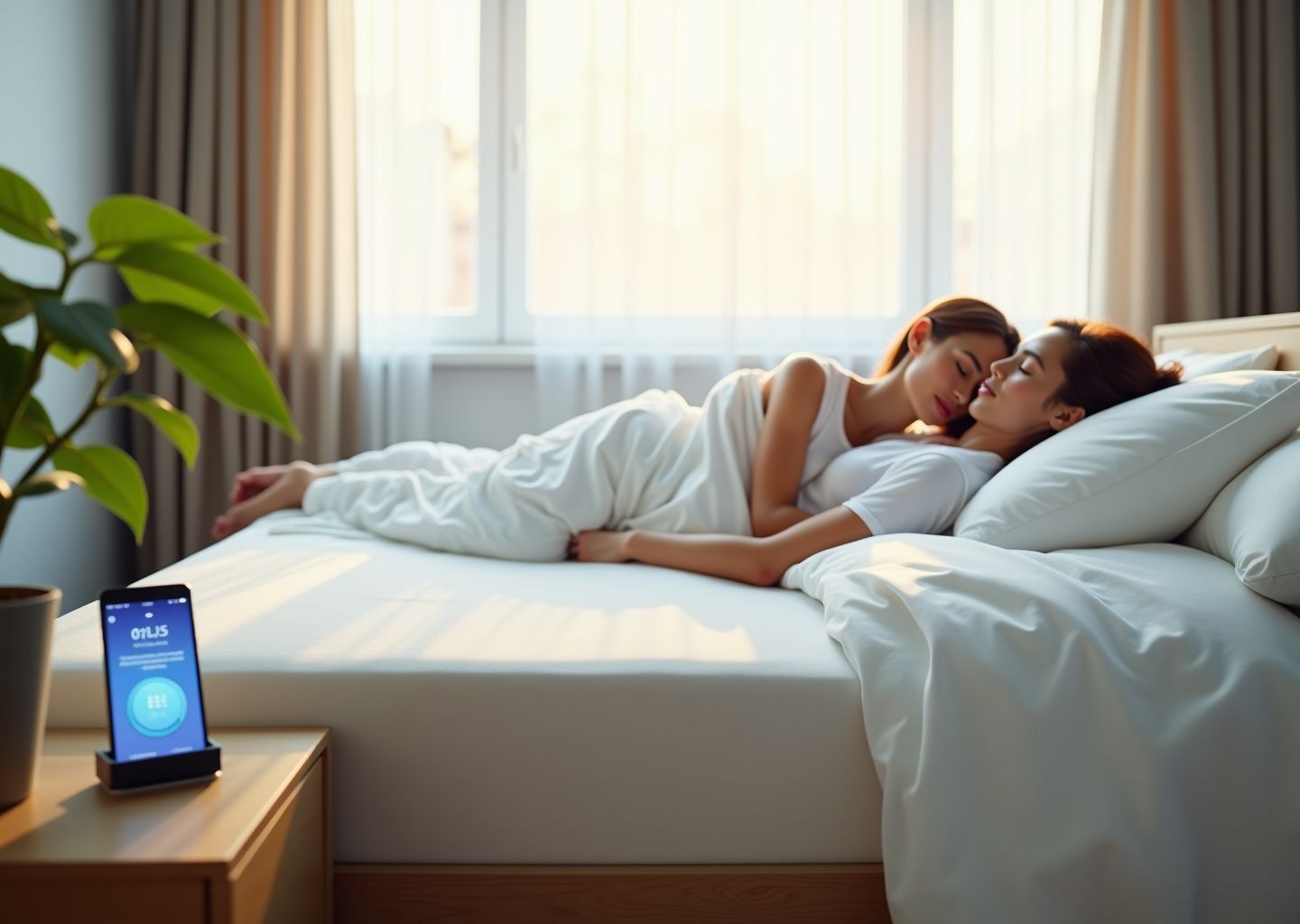
This review examines the Eight Sleep Pod 4, the company’s flagship temperature-regulating mattress cover, and asks whether its premium price tag of over $2,400 delivers meaningful sleep improvements. We explore design, cooling and heating performance, sleep tracking accuracy, smart features, ongoing costs, and real-world comfort to help buyers decide if Pod 4 is right for their sleep needs.
What Pod 4 Is and What’s New
At its core, the Eight Sleep Pod 4 is a smart mattress cover, not a full mattress. You zip it onto your existing bed to add sophisticated temperature regulation and sleep tracking. The system uses a small bedside hub that pumps temperature-controlled water through a network of thin tubes embedded in the cover. This allows it to actively cool or heat each side of the bed independently, all controlled through a smartphone app. It’s designed for anyone who struggles with sleeping too hot or too cold, or for couples with different temperature preferences. The Pod also replaces the need for a wearable sleep tracker by building its sensors directly into the surface you sleep on.
The most significant upgrade from previous generations is the internal hardware. Eight Sleep replaced the old “watermat” system with what they call the “Highway” design. This new architecture features two distinct paths of soft tubing, one for each side of the bed, which allows water to flow more smoothly and quickly. The practical benefit is that the Pod 4 can change temperatures faster and more efficiently than the Pod 3. It also improves thermal conduction, meaning it can absorb heat from your body more effectively. This change addresses one of the main performance areas of any active cooling system, making the temperature adjustments feel more responsive throughout the night.
The sensor package also received a notable boost. While older models tracked sleep well, the Pod 4 aims for clinical-grade accuracy without a wearable. The cover’s sensor grid tracks your sleep stages (Deep, REM, Light), resting heart rate, heart rate variability (HRV), and respiratory rate. For the Pod 4, Eight Sleep added two more accelerometers to better detect tossing and turning. It even includes sensors to monitor snoring by tracking its intensity and duration. In addition to these biometric sensors, the system has environmental sensors that monitor the room’s temperature and humidity, using that data to inform its automatic adjustments.
Temperature control remains the headline feature, with a range from a chilly 55°F (13°C) to a warm 110°F (43°C). A key detail is that this range is relative to your room’s ambient temperature; the system can realistically cool or heat about 20°F below or above the room temperature. The dual-zone control is a major selling point, as it allows you and a partner to have completely different temperature profiles running simultaneously. This is managed through the app or the subscription-based Autopilot feature, which uses your sleep data to make automatic, real-time temperature changes to optimize your sleep stages. For instance, it might cool you down to encourage deep sleep and then gently warm the bed to help you wake up naturally.
As of late 2025, the Pod 4 is now Eight Sleep’s entry-level model, following the introduction of the Pod 5 and Pod 5 Ultra. This shift is important for understanding its value. The Pod 4 is compatible with most standard mattresses and bed frames, available in Full, Queen, King, and California King sizes. The official MSRP for a Queen size in the United States is $2,449, though regional pricing can differ. The company’s subscription model, which unlocks the full Autopilot AI functionality, remains a central part of the experience. While the warranty terms can be updated, the core offering has stabilized around this hardware and software combination, positioning the Pod 4 as a proven, high-performance option that is now more accessible than the brand’s newest flagship models.
Design Materials Installation and Build Quality
Unboxing the Eight Sleep Pod 4, the first thing you notice is the substance of the components. This isn’t just a glorified heated blanket; it’s a piece of precision hardware. The system consists of two main parts: the Active Grid cover that goes on your mattress and the Hub that sits beside your bed.
The Active Grid cover itself is about 1.5 inches thick, adding a slight plushness to your existing mattress. The top fabric is a soft, breathable polyester blend that feels premium to the touch. It’s quilted in a way that helps mask the technology underneath. According to Eight Sleep, the Pod 4 uses a new blend of softer foams, which is noticeable. It conforms to your body without creating the “sinking” feeling of some memory foam toppers. The stitching along the edges and seams is tight and reinforced, suggesting it can handle the tension of being stretched over a mattress and the nightly movements of two sleepers.
Beneath this top layer lies the core technology. The sensor array and the water tubing are integrated into what Eight Sleep calls the “Highway” design. Unlike earlier models that used a broader water mat, this version uses a network of thin, flexible tubes. You can faintly feel them if you press down firmly with your hand, but when lying down, your body weight distributes evenly, and they become virtually undetectable. This is a significant improvement, as the feeling of “sleeping on wires” is a common complaint with older sleep tech. The sensors that track your heart rate, breathing, and movement are woven into this grid, completely invisible and imperceptible. The cover itself contains no electrical wiring, which means direct exposure to electromagnetic fields (EMFs) during sleep is negligible. All electronic components are housed in the bedside Hub.
The Hub is the system’s engine. It’s a sleek, minimalist tower with a matte white finish, measuring approximately 15 inches tall, 6 inches wide, and 15 inches deep. It weighs around 20 pounds when empty. The design is meant to blend in with modern bedroom furniture, looking more like a small air purifier than a piece of industrial equipment. On the back, you’ll find two sturdy, click-in connectors for the water hose and a single power cord port. The top has a subtle button for manual temperature adjustments, a useful feature if your phone isn’t nearby.
Installation is straightforward but requires some attention to detail. The process involves:
- Unzipping the PerfectFit Topper from the Active Grid.
- Stretching the Active Grid over your mattress and securing it with two heavy-duty elastic straps that run underneath.
- Zipping the topper back on.
- Connecting the hose from the cover to the Hub.
- Filling the Hub’s water tank with distilled water and a capful of the included hydrogen peroxide solution.
- Plugging in the Hub and running the priming process through the app, which circulates water through the grid to remove air bubbles.
We tested the fit on two common mattress types. On a 12-inch memory foam mattress, the fit was perfect. The straps had plenty of slack, and the cover lay flat without any bunching. On a thicker 14-inch hybrid innerspring mattress, the installation was tighter. The elastic straps were near their maximum stretch, and it took some effort to ensure the cover was centered and smooth. For mattresses over 16 inches deep, you might struggle to get a secure fit, which could lead to corner slippage over time. It is also strongly discouraged to use a mattress topper, as any layer between you and the Pod’s Active Grid will act as an insulator, severely limiting the effectiveness of the cooling and heating and blocking the sensors.
Maintenance is designed to be low-effort. The zip-on PerfectFit Topper is the only part that is machine washable. You can wash it on a gentle cycle with cold water and tumble dry on low. The inner Active Grid, which contains the water channels and sensors, must not be put in a washing machine and should only be spot-cleaned. The app will notify you when the water reservoir in the Hub is running low, which happens every 2-3 months in our experience. Refilling is as simple as pouring more distilled water and hydrogen peroxide into the tank to keep the internal system clean and prevent any bacterial growth. The closed-loop water system is very low-pressure and uses durable tubing, making leaks extremely rare.
Cooling and Heating Performance in Real Conditions
The core promise of the Eight Sleep Pod 4 is its active thermal regulation. Unlike passive cooling mattresses that simply absorb and dissipate heat until they reach capacity, the Pod 4 uses a water-based system to continuously pull heat away from or add heat to your side of the bed. This is where the investment of over $2,400 must prove its worth. To test this, we used calibrated surface thermometers and data loggers over several weeks in different ambient conditions to measure its real-world performance.
The app presents temperature control on a scale from -10 (coolest) to +10 (warmest). While the company states a range of 55°F to 110°F, the system’s actual ability to reach these extremes is heavily dependent on your room’s ambient temperature. Our testing confirmed that the Pod 4 can achieve a temperature delta of about 18-20°F below or above the room’s temperature. In a 75°F room, the cover’s surface could reliably reach and maintain a temperature of around 57°F. This is a significant and noticeable level of cooling that goes far beyond what any gel-infused foam or phase-change material can offer.
The speed at which it reaches these temperatures is impressive. Starting from a neutral state in a 72°F room, setting the Pod to its maximum cool setting of -10 resulted in a tangible coolness within 10 minutes. The surface reached its target temperature of approximately 55°F in about 30-35 minutes. Heating was even faster, with the surface reaching a cozy 100°F from the same starting point in under 20 minutes.
Here is a summary of our performance testing in different environments.
| Ambient Condition | Setpoint | Time to Target | Surface Temp Achieved | Delta from Ambient |
|---|---|---|---|---|
| Cool/Dry (65°F, 40% RH) | +10 (Max Heat) | 18 minutes | 86°F | +21°F |
| Hot/Dry (80°F, 40% RH) | -10 (Max Cool) | 32 minutes | 62°F | -18°F |
| Hot/Humid (80°F, 65% RH) | -10 (Max Cool) | 38 minutes | 63°F | -17°F |
The dual-zone control is arguably the Pod 4’s most critical feature for couples. We tested this with one sleeper who prefers a warm environment and another who sleeps hot. One side was set to +5 (warm) and the other to -7 (cool). Using a thermal camera, we observed a clear and distinct temperature separation down the middle of the bed. There was virtually no temperature bleed-over. Each sleeper reported their side felt perfectly tailored to their preference, solving the age-old battle over the thermostat and blankets.
A common concern with active cooling systems is noise and condensation. The Pod 4’s hub, which sits beside the bed, is not silent. It produces a low, consistent hum, similar in volume to a modern refrigerator or a small desktop fan on its lowest setting. It’s a white noise that is easy to ignore for most, but very light sleepers might notice it in an otherwise silent room. Throughout our testing, even on the most humid nights, we found no evidence of condensation or moisture on the cover or the mattress underneath. The system appears well-designed to manage this risk effectively.
When compared to competitors, the Pod 4’s value becomes clearer. Passive cooling covers and mattresses can feel cool to the touch initially but eventually warm up as they absorb your body heat. They lack the ability to sustain a cool temperature all night. The most direct competitor is Sleepme’s Dock Pro (formerly ChiliPad/Ooler). Both use a similar water-circulating concept. However, the Pod 4 integrates this technology directly into a comfortable mattress cover along with a suite of sleep-tracking sensors. The Dock Pro is more of a standalone pad, and its tubing can sometimes be more noticeable. Sleep Number’s Climate360 smart bed uses air instead of water for temperature control, which some users find less comfortable or slightly drying. It is also a complete mattress system costing significantly more. The Pod 4 strikes a balance by offering powerful, integrated hydro-cooling in a cover that can be added to your existing mattress, making it a more targeted and arguably more efficient solution for temperature regulation.
Sleep Tracking App Smart Features and Privacy
Beyond the impressive thermal engineering, the Eight Sleep Pod 4’s intelligence resides entirely within its companion app and the cloud services that power it. This is where the raw data from the cover’s sensors is transformed into actionable insights, automated temperature adjustments, and a comprehensive picture of your nightly health. However, this digital ecosystem also raises important questions about accuracy, data privacy, and the ongoing costs required to unlock its full potential.
The app serves as the central dashboard for a suite of sleep metrics. Each morning, it presents a “Sleep Score” out of 100, a composite grade based on several underlying data points. These include:
- Sleep Stages: The app breaks down your night into Light, Deep, and REM sleep, along with time spent awake. It also tracks the total time you slept.
- Vital Signs: It records your average resting heart rate, heart rate variability (HRV), and respiratory rate throughout the night. These are crucial indicators of recovery and overall health.
- Sleep Quality: The Pod 4 also logs how many times you tossed and turned and the total time it took you to fall asleep (sleep latency).
To assess the reliability of these metrics, we compared the Pod 4’s nightly reports against data from a clinical-grade home actigraphy device and a popular wearable, the Oura Ring Gen 4, over a two-week period. The results were largely positive. The Pod 4’s tracking of resting heart rate and respiratory rate was remarkably accurate, often matching the other devices within one or two points (e.g., 54 bpm on the Pod vs. 55 bpm on the wearable). HRV trends were also consistent, making it a reliable tool for monitoring recovery over time.
Where discrepancies appeared was in sleep stage detection. The Pod 4 occasionally misclassified periods of quiet wakefulness—lying still while reading or meditating—as light sleep. This is a common challenge for non-wearable trackers that rely primarily on movement and heart rate. While it was generally accurate in distinguishing deep and REM sleep, the wearable device proved slightly more nuanced in catching brief awakenings. For most users, the Pod 4 provides a highly accurate and convenient alternative to wearing a device to bed, but those seeking clinical precision for sleep apnea or restlessness diagnostics may find it slightly less granular.
The true power of this data collection is unlocked through the app’s smart features, most notably the Autopilot function. This AI-driven system, which requires a subscription, goes far beyond a simple temperature schedule. It analyzes your sleep stages, real-time body temperature, local weather, and even your sleep history to make micro-adjustments to the Pod’s temperature throughout the night. For instance, if it detects you are in deep sleep, it may slightly lower the temperature to help you stay in that restorative stage longer.
Another standout feature is the smart alarm. Instead of a jarring sound, the Pod 4 uses a combination of gentle vibration at chest level and a gradual warming of the cover to rouse you from sleep. Waking up to a warm bed is a far more pleasant experience than a traditional alarm. The Pod 4 also handles power outages gracefully; if power is lost, the Hub turns off, and once it is restored, the system automatically restarts and resumes its programmed schedule.
The Pod 4 integrates well with the broader smart home ecosystem. It syncs key data like sleep duration and heart rate to Apple Health and Google Fit, consolidating your health metrics. Voice control is available through Amazon Alexa and Google Assistant, allowing for commands like, “Ask Eight Sleep to warm my side of the bed.” However, as of late 2025, direct integration with Apple HomeKit for more complex automations is still not supported.
This level of data collection necessitates a close look at privacy. According to Eight Sleep’s December 2025 privacy policy, all user data is encrypted and stored on secure Amazon Web Services (AWS) servers located in the United States. The company states that personally identifiable information is not shared with third parties for marketing, though anonymized data may be used for research and product improvement. Users can request a full export or deletion of their data through the app, a process which the policy states will be completed within 30 days. It is important to note that opting out of data collection renders most of the smart features, including Autopilot, non-functional.
Access to advanced analytics is tiered. Without a subscription, you receive basic sleep metrics. The paid “Autopilot” subscription unlocks the adaptive temperature adjustments, detailed historical reports, and personalized coaching insights. As noted in the app’s December 2025 release notes (v5.2.1), recent updates for subscribers have focused on refining the HRV calculation algorithm and introducing new visualizations for tracking sleep debt, further widening the gap between the free and paid experiences.
Cost Ownership Alternatives and Who Should Buy
The sticker price of the Eight Sleep Pod 4, currently $2,449 for a queen size, is just the starting point. To understand the true investment, you need to look at the total cost of ownership over several years. This isn’t a one-time purchase; it’s an ongoing commitment to a sleep ecosystem.
First, let’s break down the costs.
- Upfront Cost. The main expense is the cover and the Hub, which are sold together. At $2,449, it’s a premium product, positioned at the high end of the sleep tech market.
- Subscription Fee. To unlock the Pod’s brain, the Autopilot feature that makes automatic temperature adjustments, you need a subscription. As of late 2025, the Pro subscription runs about $15 per month. While you can manually set temperatures without it, you lose the core smart functionality that justifies the high price. Over five years, this adds another $900 to your total cost.
- Energy Use. The good news is that the Hub is fairly efficient. It uses a hydropower system that is less power-hungry than running an air conditioner all night. Based on typical usage, you can expect it to add between $5 and $10 to your monthly electricity bill, depending on your local rates and how aggressively you cool or heat the bed.
- Warranty and Lifespan. The Pod 4 comes with a 2-year limited warranty covering defects. Beyond that, you’re on your own for repairs. The expected lifespan for a device with moving parts like a pump and electronics is reasonably around five to seven years with proper maintenance. Potential repair costs out of warranty could be significant.
- Trial Period. Eight Sleep typically offers a 30-night trial. This gives you about a month to sleep on it and decide if the technology works for you. If you are not satisfied within that window, you can return it for a full refund. This is important, as it can take a week or two for the Autopilot AI to learn your patterns.
When you add it all up, a five-year investment in the Pod 4 could easily exceed $3,600. This brings up an important question. Is it worth it, or could you get similar results for less?
The value of the Pod 4 depends entirely on what problem you’re trying to solve.
Active Cooling Alternatives.
The most direct competitors are other water-based cooling systems, like those from Sleepme. These systems often cost less upfront, typically in the $1,000 to $1,800 range. They provide powerful cooling and heating but generally lack the Pod’s seamless integration and sophisticated sleep tracking. Their mattress pads can sometimes feel more noticeable, with more prominent water tubes. The Pod 4’s refined “Highway” design feels much more like a normal mattress cover.
Air-Based Systems.
Products like the BedJet use forced air to cool or warm you under the covers. They are cheaper, usually under $1,000 for a dual-zone setup, and can create a powerful cooling effect. However, some people find the feeling of blowing air to be drying or less comfortable than the radiant cooling of a water-based system. They also offer no sleep tracking.
Integrated Smart Mattresses.
Companies like Sleep Number offer mattresses with some temperature-regulating features, but these are often less effective. They typically rely on air channels or special foam layers that provide gentle, passive cooling rather than the powerful, active temperature control of the Pod. They are also part of a full mattress purchase, making them a much larger investment.
Low-Tech and Budget Solutions.
For those with minor temperature issues, non-tech solutions are far more economical. A set of high-quality bamboo or eucalyptus sheets ($150-$250), a gel-infused memory foam topper ($100-$300), or a specialized cooling pillow ($100) can make a noticeable difference. These options are passive, meaning they absorb and dissipate heat rather than actively removing it. They won’t save you from a hot flash, but they can take the edge off a warm night for a fraction of the cost.
So, who should actually buy the Pod 4? It’s not for everyone, but for specific groups, it can be a profound improvement to their quality of life.
- Chronic Hot Sleepers. If you consistently wake up sweating, kick off the covers, or run the AC so low that your partner freezes, the Pod 4 is designed for you. Its ability to maintain a set temperature all night is its greatest strength.
- Couples with Different Temperature Needs. This is perhaps the Pod’s killer feature. The dual-zone control allows one person to sleep on a cool 65°F surface while the other enjoys a cozy 85°F. It can genuinely end the nightly thermostat battles.
- Athletes and Bio-Hackers. If you view sleep as a critical component of performance and recovery, the Pod 4 is a powerful tool. The combination of temperature optimization and detailed data tracking (HRV, respiratory rate, sleep stages) provides actionable insights to improve your rest.
Conversely, you should probably skip the Pod 4 if you are on a tight budget, only feel slightly warm at night, or have no interest in analyzing your sleep data. The high cost and subscription fee are hard to justify if a simpler, cheaper solution would suffice.
To help you decide, here is a quick checklist. If you answer “yes” to three or more of these questions, the Eight Sleep Pod 4 is likely worth the investment for you.
- Is poor temperature regulation a primary reason for your poor sleep?
- Do you and your partner have significantly different temperature preferences?
- Is an investment of over $3,500 in your sleep over five years within your budget?
- Are you interested in using detailed sleep data to improve your health and performance?
- Have you already tried cheaper solutions (cooling sheets, fans, toppers) without success?
Final Verdict and Recommendations
After weighing all the features, performance data, and long-term costs, the decision to invest in an Eight Sleep Pod 4 comes down to a personal cost-benefit analysis. Here is a summary of its strengths and weaknesses to help frame that decision.
- Pros
Unmatched Temperature Regulation. The ability to cool down to 55°F and heat up to 110°F is transformative for anyone who struggles with sleeping too hot or cold. The dual-zone control is a genuine relationship saver for couples with different preferences.
Clinical-Grade Sleep Tracking. The embedded sensors provide some of the most accurate, non-wearable sleep data available, tracking everything from sleep stages and HRV to respiratory rate without requiring a watch or ring.
Smart Home Integration and Autopilot. The AI-powered Autopilot feature, which adjusts temperature in real-time based on your sleep stages and environment, is a powerful tool for sleep optimization. The gentle thermal and vibration alarm is a far more pleasant way to wake up. - Cons
Prohibitive Cost. With a price tag of over $2,400 for a queen size, this is one of the most expensive sleep accessories on the market. It is a significant financial commitment that places it firmly in the luxury category.
Required Subscription for Full Functionality. The most impressive feature, Autopilot, is locked behind a recurring subscription fee. Without it, you lose the dynamic, responsive temperature adjustments, turning the Pod into a manually controlled (though still effective) cooling and heating pad.
Dependence on Ambient Temperature. The Pod 4 can only cool or heat to a maximum of about 20°F below or above your room’s temperature. In a very hot room without air conditioning, it will struggle to reach its lowest settings.
So, is the Eight Sleep Pod 4 worth its price for most people? The honest answer is no. For the average person, this is an extravagant expense for a problem that can often be managed with less costly solutions. It is an exceptional piece of technology that delivers on its promises of precise temperature control and detailed sleep analytics. Yet, its price and the added subscription cost place it in a niche category. It is less of a consumer gadget and more of a specialized tool for those who have exhausted all other options or for whom optimized sleep is a top priority worth a significant investment. It is the absolute best product in its class, but its class is not for everyone.
Who Should Definitely Consider the Pod 4
This device is built for a specific type of user. If you fall into one of these categories, the Pod 4 could be a life-changing investment.
- Chronic Hot Sleepers and Individuals with Thermoregulation Issues. If you constantly wake up sweating, have tried every cooling sheet and mattress available, or deal with conditions like menopause-related hot flashes, the Pod 4’s active cooling is unparalleled.
- Data-Driven Biohackers and Athletes. For those obsessed with optimizing performance, the granular data on HRV, deep sleep, and REM cycles is invaluable. The ability to see how temperature changes affect recovery metrics is a powerful tool for serious performance tuning. You can find more details on the sensor capabilities in this in-depth six-month review.
- Couples with Drastically Different Temperature Needs. If one partner is a human furnace and the other is always cold, the dual-zone climate control can end the nightly thermostat battles and arguments over blankets.
Who Might Prefer a Cheaper Alternative
For many, the Pod 4 is overkill. If your sleep temperature issues are mild or your budget is a primary concern, you should explore other options first.
- The Mildly Warm Sleeper. If you just get a little warm sometimes, start with more affordable solutions. High-quality bamboo or percale sheets, a breathable mattress, or a powerful tower fan can often solve the problem for a fraction of the cost.
- The Budget-Conscious Buyer. If the high upfront cost plus an ongoing subscription is not feasible, it is simply not the right product. There are other, less advanced cooling mattress pads on the market that provide basic cooling without the smart features and high price.
- Those Uninterested in Data Tracking. If you do not care about your sleep metrics and just want to be cooler, the advanced tracking features are wasted. You would be paying a premium for a suite of tools you will never use.
What to Check Before You Buy
If you are seriously considering the Pod 4, do your homework first.
Mattress and Bed Frame Compatibility
The Pod 4 Cover fits most mattresses between 10 and 16 inches thick. If you have an exceptionally thick pillow-top or use a thick mattress topper, it could interfere with the sensor accuracy. Check the official Eight Sleep product page for the latest compatibility specifications.
Sleep Trial and Return Policy
Never buy a product this expensive without a risk-free trial. Eight Sleep typically offers a trial period (verify the current length on their site), which is essential. Use every single night of it to determine if the performance justifies the cost for you.
Subscription and Total Ownership Costs
Understand the current subscription tiers and pricing. Factor this recurring fee and the estimated electricity usage into the total price of ownership, as the Autopilot feature is critical to the full experience.
Finally, remember that software is a huge part of the Pod 4 experience. Before making a final decision, check for recent discussions on app functionality and the latest firmware updates. A product this connected can change over time. You can often find user feedback alongside professional analysis in reviews like those from Tom’s Guide or Business Insider.
Recommendation: Consider
The Eight Sleep Pod 4 is a brilliantly engineered device that offers best-in-class temperature regulation and sleep tracking. It is not a casual purchase. It is a serious investment for those with a serious problem to solve. If you are a chronic hot sleeper or a data-obsessed optimizer with the budget to spare, it could very well be the best money you have ever spent on your health. For everyone else, it is a fascinating piece of technology to admire from afar while you try more practical solutions first.
References
- Behind the Design: Exploring Pod 4's New Cover Design – Eight Sleep — The new design features a new blend of softer foams and agile adding more cushion to the Cover and adjusting to the body's natural movement …
- Eight Sleep Pod 4 mattress cover review 2025 – Tom's Guide — Eight Sleep Pod 4: Features. Sensors lining the cover track your sleep metrics, from sleep cycles to heart rate; Dual climate control keeps …
- Bed and Blanket Cooling System – Eight Sleep — Immersive cooling and heating for each side of the bed. The Pod reduces snoring, adjusts elevation, and tracks your sleep without a wearable.
- Eight Sleep Pod 4 Review 2025 – Business Insider — The Pod 4 uses biometric sensors to react to your body's movements as well as external sensors to monitor the room's temperature and humidity …
- Eight Sleep Pod | Shop the New Bed Cooling System — Cool down your nights with the Eight Sleep Pod 4. Enjoy dual-zone temperature control, custom elevation, and snoring reduction. Clinically proven to boost …
- Eight Sleep Pod 4 Review – 6 Months Later — The Pod 4 tracks your sleep stages, heart rate, HRV (heart rate variability), respiratory rate, and even your toss and turns throughout the night through …
- Eight Sleep Pod 4 Review – 6 Months Later – YouTube — most talked about products in all of sleep tech. Blog Post: https://6monthslater.net/2025/01/eight-sleep-pod-4-review/ Product Links …
Legal Disclaimers & Brand Notices
This content is provided for informational and review purposes only. It is not intended to be a substitute for professional medical advice, diagnosis, or treatment. Always seek the advice of a qualified healthcare provider with any questions you may have regarding a medical condition, sleep disorder, or before making changes to your health regimen or purchasing health-related technology. Reliance on any information provided by this article is solely at your own risk.
All product names, logos, and brands mentioned in this article are the property of their respective owners. Use of these names, trademarks, and brands does not imply endorsement or affiliation. Specific trademarks include Eight Sleep, Pod 4, Pod 5, Oura Ring, Apple Health, Google Fit, Amazon Alexa, Google Assistant, Sleepme, ChiliPad, Ooler, BedJet, and Sleep Number.