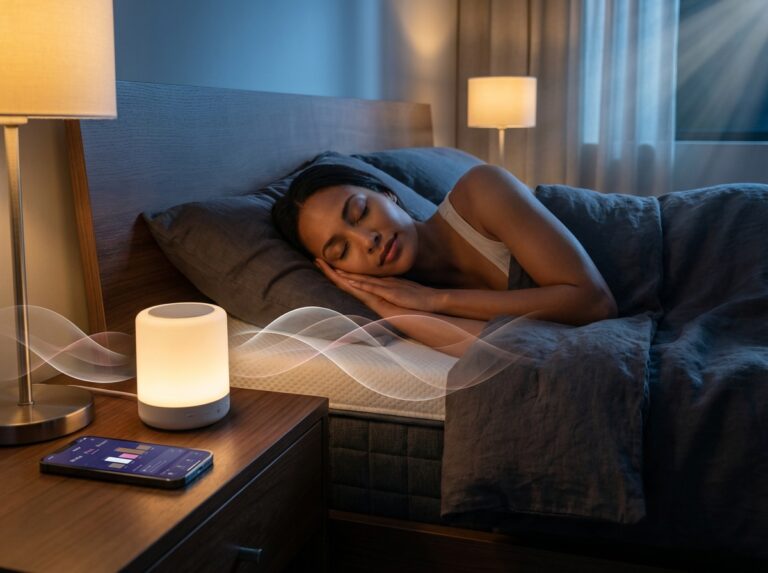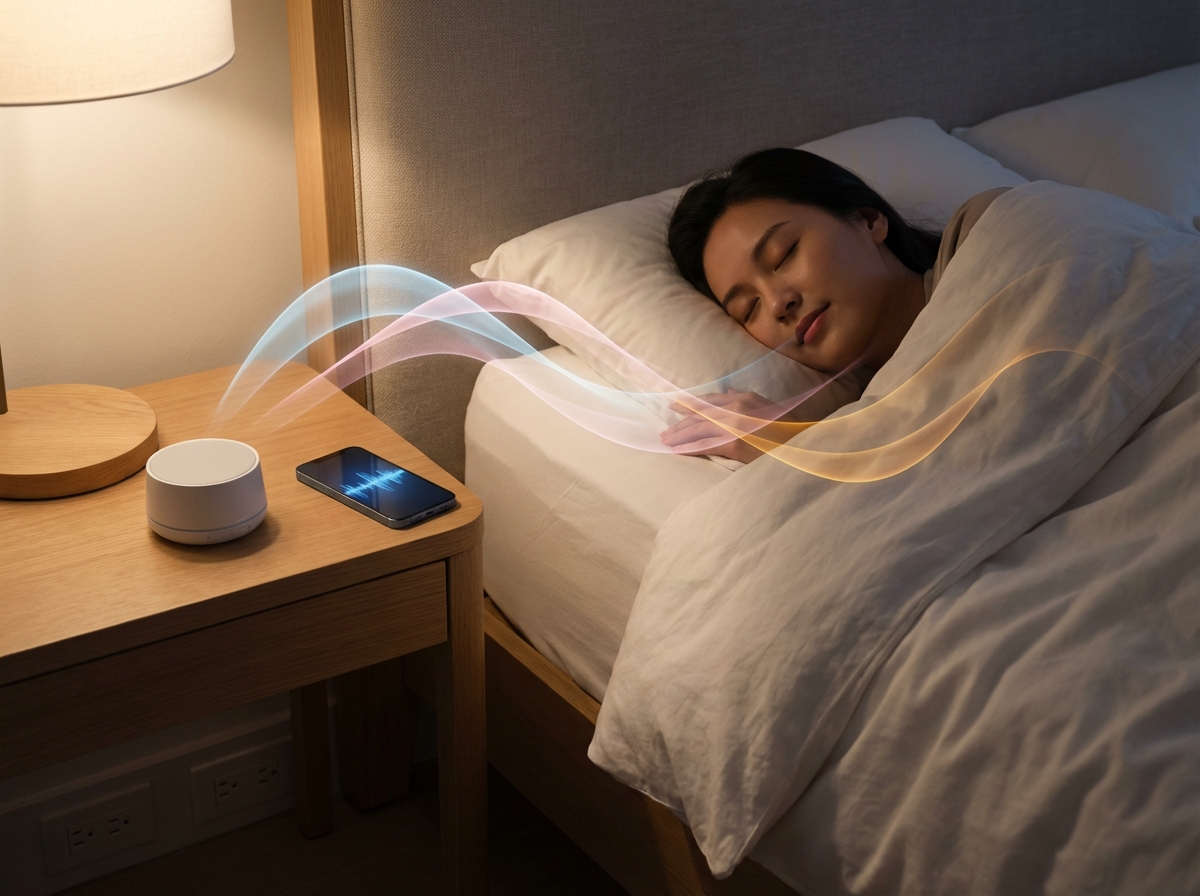
Many people use constant sound to fall asleep, but not all noise is the same. This article compares white, pink, and brown noise—how they differ acoustically, what research says about sleep benefits, and how to choose and use devices safely. You’ll get actionable guidance tailored to common sleep problems and the U.S. regulatory and safety context.
Understanding Noise Colors and How They Differ
Sound is not just a single experience. It has a physical shape and a specific texture that determines how our brains react to it during the night. In the world of sleep technology, we use colors to describe these different textures. These colors represent how acoustic energy is spread across the frequencies that humans can hear, which typically ranges from 20 Hz to 20,000 Hz. Understanding these differences is the first step in choosing a device that actually helps you rest rather than adding to your sensory load.
White Noise and the Flat Spectrum
White noise is the most common term people use, but it has a very specific technical definition. It contains equal power across all frequencies. If you were to look at a graph of its power spectral density, it would appear as a perfectly flat horizontal line. Because it includes every frequency at the same intensity, it creates a dense wall of sound. Most listeners describe it as a bright, constant hiss. It sounds very similar to the static on an old television or the steady hum of a large air conditioner. This color is highly effective at masking sudden, high-pitched sounds like a barking dog or a car horn. However, because it has so much energy in the higher frequencies, some people find it too sharp or clinical for a relaxing bedroom environment. According to Axios, scientists believe these hums work by masking environmental distractions and syncing brain activity for relaxation.
Pink Noise and the Balanced Slope
Pink noise is often described as a more natural version of white noise. It uses a 1/f power spectrum, which means the energy decreases by 3 decibels for every octave as the frequency increases. This creates a spectral slope that tilts downward. To the human ear, this sounds much more balanced. It lacks the piercing quality of white noise and instead sounds like steady rainfall, a gentle waterfall, or wind rustling through a forest. Many people prefer this because it feels softer. The Sleep Foundation notes that pink noise may help people fall asleep faster. It might also help people obtain better deep sleep. It provides enough high-frequency coverage to mask noises while emphasizing the lower and middle frequencies that feel more soothing to our biology.
Brown Noise and the Deep Rumble
Brown noise, which is sometimes called red noise, takes the downward tilt even further. It has a 1/f^2 power spectrum. The energy drops by 6 decibels per octave. This results in a sound that is very heavy on the low end with almost no high-frequency hiss. Listeners perceive this as a deep, powerful rumble. It sounds like a distant thunderstorm or the low-frequency drone of a furnace. It is much deeper than pink noise. Research published in PMC suggests that brown noise is often considered more sublime than white or pink noise. Many users who find white noise uneasy or annoying gravitate toward brown noise because it feels like a heavy acoustic blanket. It is particularly good at masking low-frequency disruptions like the thumping of a neighbor’s sound system or the rumble of heavy traffic outside a city apartment.
Human Hearing and the Fletcher Munson Curve
The reason these colors sound so different to us involves the way our ears are built. Human hearing is not a flat instrument. We are much more sensitive to frequencies between 2 kHz and 5 kHz, which is where the sounds of human speech and survival signals exist. This phenomenon is known as the Fletcher Munson curve. Because white noise has equal energy across the board, our ears naturally amplify the high-pitched parts of it. This makes white noise feel much louder and harsher than it actually is. Pink and brown noise compensate for this by reducing the energy in those sensitive high-frequency zones. This makes the sound feel more consistent with how we naturally perceive the world. Northwestern Medicine explains that pink noise is lower in pitch than white noise, while brown noise is even lower. This lower pitch often aligns better with our comfort levels during the transition into sleep.
Visual Metaphors for Sound Energy
It helps to visualize these sounds as physical objects. White noise is like a flat, solid sheet of glass. It is perfectly even but can feel cold and sharp. Pink noise is like a gentle, grassy slope. It has more weight at the bottom and tapers off as it goes up. Brown noise is like a steep, heavy hill. It is mostly bass and depth with very little at the peak. These different shapes change how the sound interacts with your environment. A flat spectrum masks everything equally. A tilted spectrum focuses on comfort. Choosing the right one depends on whether you need to block out a specific annoying sound or if you just want a soothing background to help your brain shut down. BetterSleep suggests that each color offers unique benefits for managing different needs like ADHD symptoms or mental fog. For children, Nationwide Children’s Hospital suggests that gentle background sounds can help them stay asleep longer. Testing these colors at different volumes is the best way to find your personal preference.
What Research and Testing Say About Noise and Sleep
Scientists have spent decades trying to figure out if background noise actually helps us sleep. Most of the early research focused on white noise. A major systematic review from 2020 analyzed 38 different studies on the topic. It found that the evidence for white noise improving sleep is not as strong as many people think. Many of these studies were small. They often relied on what people felt rather than objective data from brain scans. However, experts like Jennifer Martin from UCLA point out that white noise is very useful in specific places. It is often used in hospitals to help patients rest. It works through a process called auditory masking. The steady sound raises the background noise level. This makes sudden sounds like a closing door or a beeping monitor less likely to wake you up. This masking effect is the primary reason white noise remains a standard recommendation for people in loud environments.
The shift toward pink noise research
Pink noise has become a major focus for researchers looking at deep sleep quality. A study by Zhou and colleagues in 2012 showed that steady pink noise can make sleep more stable compared to total silence. It might even help people fall asleep faster. The Sleep Foundation reports that pink noise may improve the quality of deep sleep. This happens because the sound waves can synchronize with your brain waves. This is called entrainment. In 2025, Northwestern University continued its work on pink noise pulses. These are short bursts of sound played at specific times during the night. Their testing shows these pulses can enhance slow wave activity. This is the part of sleep that helps your body recover. It helps with memory too. These pulses are timed to match the natural rhythm of the brain. This makes pink noise a top choice for people who want to improve the restorative power of their sleep.
Brown noise and the feeling of sublimity
Brown noise is very popular on social media right now. It has the least amount of clinical research behind it compared to other colors. A large study published in PMC involved 1,267 participants. They compared how people reacted to different noise colors. The results showed that people found brown noise to be the most sublime. White noise was rated as the most uneasy. The researchers used a Friedman test to look at vitality ratings. They found significant differences in how people felt after hearing these sounds. White noise caused the most unease in both parts of the study. Even though many people use brown noise to manage stress, we still need more long term trials to understand its full effect on sleep cycles. The deep rumble of brown noise seems to be more comfortable for the human ear. It lacks the high frequency energy that makes white noise sound harsh.
How noise affects different populations
Noise affects different people in different ways. A 2022 study looked at how white noise affects children with ADHD. It found the noise helped them focus. It improved their memory. It might work by helping the brain release dopamine. But the same study found that white noise was not good for preschoolers without ADHD. It seemed to overstimulate them. This shows that noise is not a one size fits all solution. For infants, researchers suggest using very low volumes. The sound machine should be placed far away from the crib to protect their hearing. In the ICU, white noise has been shown to reduce the number of times patients wake up during the night. It creates a more stable environment in a place that is usually very chaotic.
The mechanisms of sleep sounds
There are three main ways noise helps you sleep. The first is masking. This blocks out sudden sounds. The second is habituation. Your brain learns to ignore a constant sound over time. This allows you to stay asleep even if there is noise outside. The third is entrainment. This is mostly seen with pink noise. It helps your brain stay in a deep sleep state. An article from Axios in late 2025 mentions that these sounds can sync brain activity to help with relaxation. This synchronization is key for people who struggle with staying asleep. It helps the brain maintain the slow waves needed for physical health.
Limitations in current sleep science
We have to be careful with the current data. Many sleep studies only involve a few dozen people. They often only last for one or two nights in a lab. This is not the same as using a noise machine in your own bedroom for months. Some studies use subjective measures like sleep diaries. Others use objective measures like polysomnography. These two types of data do not always agree. We also do not know if people become dependent on these sounds over time. Most researchers agree that more large scale trials are needed. We need to see how these sounds affect people over several weeks.
Is there a best noise color?
As of December 2025, no single noise color has been proven to be the best for everyone. White noise is excellent for masking loud environments. It is the most studied for insomnia and hospital settings. Pink noise shows the most promise for improving deep sleep. It is often used in new sleep tech devices. Brown noise is often the most comfortable for people who find higher pitches annoying. It is a favorite for those with high anxiety. Most experts suggest trying a noise color for at least two weeks to see how your body responds. Your personal preference is just as important as the clinical data. If a sound makes you feel uneasy, it will not help you sleep regardless of what the studies say.
Practical Guide to Picking and Using the Right Noise for Sleep
Choosing the right sound for your bedroom starts with identifying your specific sleep hurdle. If you struggle with a partner who snores or live on a busy street, white noise is the standard choice. It covers the entire frequency spectrum with equal intensity. This creates a consistent blanket of sound that hides sudden spikes in volume. Some people find the high frequencies in white noise too sharp. If that sounds like you, pink noise is a better fit. It has more power in the lower frequencies. It sounds like a steady rain or a rustling forest. According to the Sleep Foundation, pink noise may help people reach deep sleep more effectively.
Brown noise is the deepest of the three. It sounds like a low rumble or a distant ocean. It is very effective at masking low frequency sounds like a neighbor’s subwoofer or a rumbling heater. Many people with ADHD find brown noise helps quiet a racing mind before bed. You should test each color for at least two nights to see how your brain adjusts. What feels soothing at 10 PM might feel annoying by 3 AM.
Safety Guidelines and Volume Limits
Using sound machines safely requires monitoring the decibel level at your ear. The National Institute for Occupational Safety and Health sets the risk threshold for hearing loss at 85 decibels for eight hours. For sleep, you want to stay well below that. High volumes throughout the night can lead to auditory fatigue or hearing damage over time. The World Health Organization suggests keeping nighttime indoor noise levels around 30 decibels for optimal health. For sleep tech, a safe range for adults is between 50 and 60 decibels. This is roughly the volume of a quiet conversation or a refrigerator hum.
| User Category | Recommended Limit (dB SPL) | Placement Tip |
|---|---|---|
| Adults | 50 to 60 dB | At least 3 feet from the head |
| Infants | Under 50 dB | At least 7 feet from the crib |
| Tinnitus Sufferers | Just below the ringing level | Use a bedside speaker |
You can measure the volume using a smartphone app with a sound pressure level meter. Hold your phone exactly where your head rests on the pillow while the machine is running. If the reading stays between 50 and 60 decibels, you are in a safe zone. This volume is comparable to a quiet office or a gentle rainfall. Infants need much lower levels. Keep their devices below 50 decibels and place them at least seven feet away from the crib. If you use a smartphone app near a child, put the phone on airplane mode to avoid unnecessary signals near the child.
Selecting the Right Device
The market for sleep tech has expanded beyond simple fans. Dedicated noise machines are reliable because they do not rely on a phone battery. They often have physical buttons that are easy to find in the dark. Smartphone apps offer the most customization. You can use spectral equalizers to adjust the pitch to your liking. Smart speakers are convenient. They come with privacy concerns since they are always listening for a wake word.
Smart mattresses with integrated sound systems are a newer category. These provide an immersive experience by vibrating the bed slightly in sync with the low frequencies. If you prefer something more personal, hearing aid style sleep devices fit inside the ear. These are helpful for people who sleep with a partner who prefers total silence. When shopping, check for a trial period of at least 30 days. You need time to ensure the speaker quality does not produce a looping sound that your brain might eventually notice. Look for devices with a wide SPL range and clear privacy policies regarding data collection.
Personalizing Your Sound Environment
Standard noise colors can be improved with a few adjustments. Many apps allow you to layer sounds. You might combine pink noise with the sound of a crackling fire or a distant stream. This makes the sound feel more natural. Use a fade out feature if you do not want the noise to play all night. A slow 30 minute fade prevents the sudden silence from waking you up. If you use a smart home system, you can automate your sound to start exactly when your wind down routine begins.
Portability is another factor to consider. If you travel often, a battery powered device or a high quality app is better than a bulky bedside fan. Ensure your device has a stable power source if you use it for eight hours straight. Relying on a phone battery can lead to the device overheating. The sound might also cut out if the battery dies.
When to See a Specialist
Noise is a helpful tool, but it is not a cure for underlying medical issues. If you have persistent insomnia that lasts more than a month, you should consult a clinician. Sleep apnea is another condition that noise cannot fix. If you wake up gasping for air or feel exhausted despite using a sound machine, seek a sleep study. Tinnitus management often involves sound therapy. This should be done under the guidance of an audiologist to ensure you are not masking a more serious ear condition. Combining noise machines with Cognitive Behavioral Therapy for Insomnia is often the most effective long term strategy for chronic sleep struggles.
Specialized Questions and Answers About Noise for Sleep
Can noise worsen tinnitus?
Many people use white or pink noise to manage the ringing in their ears. These sounds provide a background layer that makes the internal ringing less noticeable. Some individuals with sensitive hearing find high pitched white noise irritating. If your tinnitus feels more piercing after using a sound machine, you should try switching to brown noise. The deeper frequencies of brown noise are often more soothing for those with tinnitus. It is important to keep the volume just below the level of your tinnitus. This technique is called partial masking. It helps your brain habituate to the ringing rather than just covering it up completely. If the noise makes your symptoms worse, stop using it and talk to an audiologist.
Can noise machines mask snoring or sleep apnea?
A noise machine is an effective tool for masking the sound of a partner who snores. White noise is particularly useful for this because it covers a wide range of frequencies. It fills in the acoustic gaps that make snoring so disruptive to a bed partner. However, noise cannot treat the underlying cause of snoring or sleep apnea. If you or your partner experience gasping or long pauses in breathing, you must seek medical advice. Using a sound machine to hide the noise of apnea can be dangerous because it might delay a necessary diagnosis. Use noise to improve your comfort, but do not use it to ignore signs of a serious sleep disorder.
Should I use headphones or speakers for white noise?
Speakers are the safest and most comfortable option for all night use. Wearing earbuds or traditional headphones can cause physical discomfort and pressure in the ear canal. This pressure sometimes leads to earwax buildup or skin irritation. If you live in a very loud environment and need headphones, choose a soft fabric headband with integrated flat speakers. These are designed for side sleepers and do not put direct pressure on the ear. For most users, a dedicated bedside machine or a high quality speaker provides a better experience. It allows the sound to fill the room naturally and prevents any risk of ear canal infections from trapped moisture.
Will long term use make me dependent?
Your brain can become habituated to sleeping with a specific sound. This means you might find it difficult to sleep in a completely silent room after using a machine for months. This is a normal psychological association and not a physical addiction. If you want to stop using the noise, you can do so by gradually lowering the volume over two weeks. This slow transition helps your brain adjust to the natural sounds of your bedroom. Many people choose to use noise machines for years because the benefits of consistent sleep outweigh the minor inconvenience of needing the device while traveling. There is no evidence that long term use at safe volumes harms your natural ability to sleep.
How to combine noise with cognitive behavioral therapy for insomnia?
Noise machines are a helpful addition to a formal CBT-I program. They help create a consistent environment which is a key part of stimulus control therapy. You should turn on the sound only when you are ready to sleep. This helps your brain associate the specific noise with the act of resting. If you follow the rule of leaving the bed when you cannot sleep, turn the noise off when you get up. Reintroduce the sound only when you return to bed feeling sleepy. This practice strengthens the mental link between the noise and successful sleep. It is a supportive tool and not a replacement for the core techniques of the therapy.
Conclusions and Practical Takeaways
The research gathered throughout 2025 makes one thing clear: there is no single noise color that works for every sleeper in every situation. Your choice depends on your environment, your brain chemistry, and your personal taste. White noise remains the most studied option and is best for masking loud environments like city traffic. Pink noise has become a favorite for those looking to improve deep sleep quality and memory, with recent studies suggesting it can sync with brain waves. Brown noise, while having fewer clinical trials, is often reported as the most soothing for anxiety and masking low-frequency rumbles.
Safety must be your first priority when using sleep tech. You should never set the volume so high that it could damage your hearing over time. A safe limit for adults is 60 decibels, roughly the volume of a quiet office. If you are using these sounds for an infant, you must be even more careful regarding placement and volume to protect developing ears. You can find more details on pink noise safety at the Sleep Foundation.
If you are buying a dedicated sound machine, check for a trial period. Your brain needs about two weeks to fully adjust to a new sound. What feels annoying on the first night might become essential by the fourteenth night. If you find that noise makes your sleep worse or if you have persistent insomnia, you should talk to a specialist. Noise is a tool to help you relax. It is not a cure for medical conditions like sleep apnea.
Tonight’s sleep checklist
- Pick one noise color based on your specific sleep goal (White for masking, Pink for depth, Brown for comfort).
- Place the sound machine or speaker at least three feet away from your head.
- Set the volume to a conservative level (50-60 dB) using a decibel meter app.
- Use a sleep diary or a wearable tracker to monitor your rest for two weeks.
- Adjust the pitch or volume if you do not see an improvement after the trial period.
- Consult a sleep doctor if you experience loud snoring or gasping during the night.
The goal of using noise is to create a predictable environment. When your brain knows what to expect, it can stop scanning for threats. This allows you to drift into the deeper stages of sleep that your body needs for recovery. Whether you choose the bright hiss of white noise or the deep rumble of brown noise, consistency is the key to success.
Sources
- White noise or pink noise: How they could help you sleep – Axios — Why it matters: Scientists say these hums can mask environmental distractions and even sync brain activity tied to relaxation — though not all " …
- Can Pink Noise Help You Sleep? – Sleep Foundation — Initial studies have found pink noise may help people fall asleep faster and obtain better deep sleep.
- are brown, pink, and white noise neutral control stimuli? – PMC – NIH — Our two studies show that brown noise was considered more sublime than white and pink noise, while white noise was considered more uneasy.
- What Noise Color Is Best for Sleep? – Northwestern Medicine — “In essence, pink noise is similar to white noise but sounds a little bit lower in pitch. Red noise or brown noise is even lower,” says Dr. Malkani. “When using …
- The Sound Palette: Why Noise Colors Matter for Sleep and Focus — White, pink, and brown noise each offer unique benefits—whether it's managing ADHD symptoms, promoting deeper sleep, or clearing mental fog. By …
- Understanding White, Brown and Pink Noise for Children's Sleep — Gentle background sounds can help children fall asleep easily and stay asleep longer, according to parents, and backed by research studies.
- 'Brown' Is the New 'White' Noise – Hearing Center Naples Florida — Studies show that immersive sounds like white, brown and pink noise may help the human brain relax, concentrate or sleep, particularly for people with ADHD.
- Brown, Pink, or White — What Type of Sound is Best for Boosting … — Most of the studies around sleep have been done on white noise, and there have been some studies that seem promising on pink noise, but very …
Legal Disclaimers & Brand Notices
The information provided in this article is for informational purposes only and does not constitute professional medical advice, diagnosis, or treatment. Always seek the advice of a physician or other qualified health provider with any questions you may have regarding a medical condition, including sleep apnea, tinnitus, or chronic insomnia. Never disregard professional medical advice or delay in seeking it because of something you have read in this article.
All product names, logos, and brands are property of their respective owners. All company, product, and service names used in this article are for identification purposes only. Use of these names, logos, and brands does not imply endorsement.